Topic: Grading and Sorting
Copper scrap grades sort copper by how pure and clean it is. Bare bright copper is clean, uncoated wire with no insulation, solder or tarnish, and it pays the most. #1 copper is clean pipe, busbar and thick wire with no solder, paint or fittings. #2 copper is copper with solder, paint, plating, fittings or corrosion, and it pays less. Insulated wire and cable are priced on how much copper is inside.
That is the whole system in four lines. The rest of this guide shows what each copper scrap grade looks like, the small things that drop copper down a grade, and how to sort a load at home or on the job so every kilo is paid at the right rate when you bring it to our Green Fields yard in Adelaide.
The four copper grades at a glance
| Grade | What it looks like | Typical sources | Downgraded by |
|---|---|---|---|
| Bare bright | Shiny, uncoated, unalloyed wire, bright copper colour all the way through | Heavy power cable with the insulation stripped off, motor and transformer winding wire (bare) | Tarnish, tin plating, enamel, any insulation left on, thin hair-like strands |
| #1 copper | Clean, solid copper: pipe and tube with no joints, busbar, clean offcuts, thick wire with light tarnish | Plumbing offcuts, switchboard busbar, electrical earthing bar, clean coil tube | Solder rings, brass fittings, paint, insulation tape, pipe lagging |
| #2 copper | Copper that is still mostly copper but not clean: soldered joints, paint, plating, heavy corrosion, fittings left on | Plumbing strip-outs, old hot water system pipe, tin-plated wire, painted pipe | Steel, plastic or brass making up a large share of the weight (then it becomes mixed scrap) |
| Insulated wire and cable | Copper wire still in its plastic or rubber jacket | Extension leads, building wire, power cable offcuts, appliance cords | Thin data cable, aluminium cable mixed in, plugs and steel armour left on |
The current guide range for each grade is on our scrap copper prices page. Rates follow the copper market and are confirmed when your copper is graded and weighed with you at the counter.
Bare bright copper: the top grade
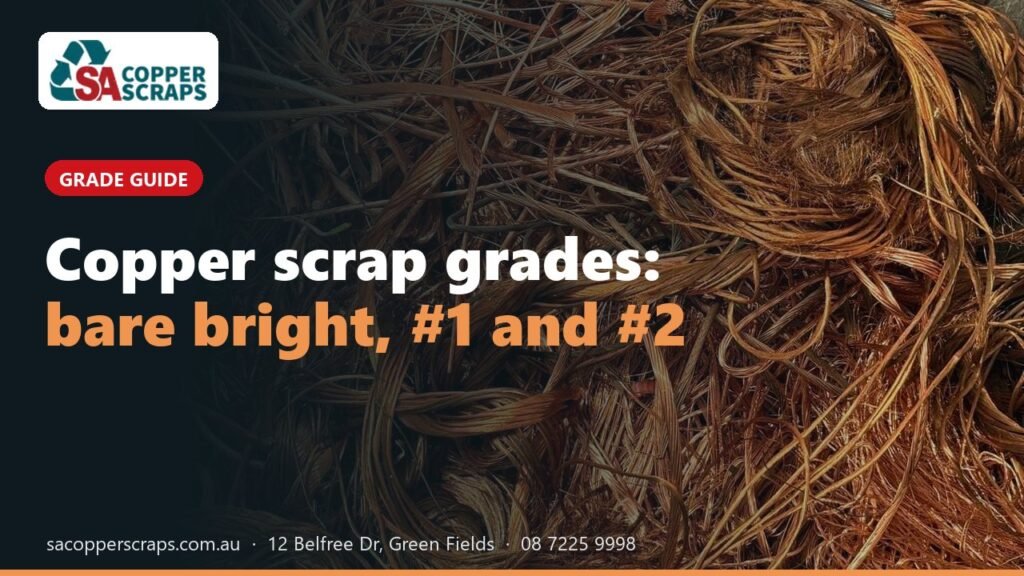
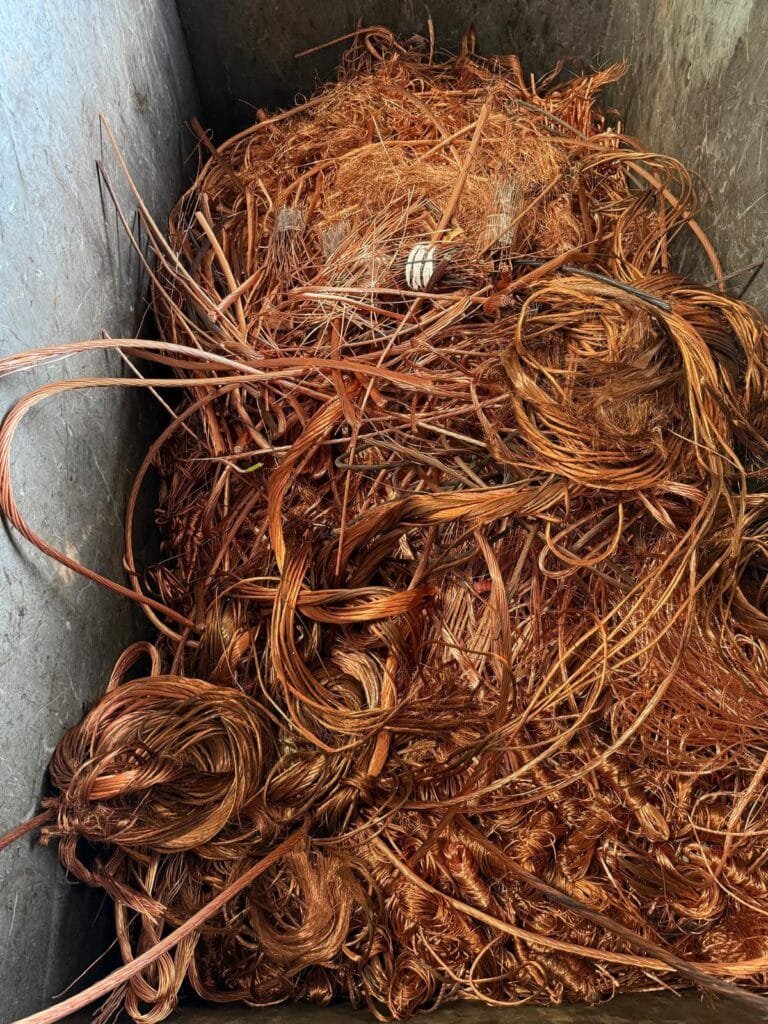
Bare bright is copper wire that is clean all the way through. Scratch it with a key and it shows the same bright copper colour underneath. Some Australian yards call it bright and shiny wire or millberry. It earns the top rate because it goes back into new copper with almost no processing.
To count as bare bright, wire needs to be:
- Uncoated: no tin plating (a silver look), no enamel or varnish.
- Unalloyed: pure copper, not brass or bronze.
- Bright: light surface tarnish is fine on some loads, but green or black oxidation drops it to #1 or #2.
- Bare: no insulation, tape or plastic left in the bundle.
Most bare bright copper in Adelaide comes from thick power cable that electricians strip. Thin wire is rarely worth stripping by hand; our guide on whether it is worth stripping copper wire explains where the line sits.
#1 copper: clean pipe, busbar and solids
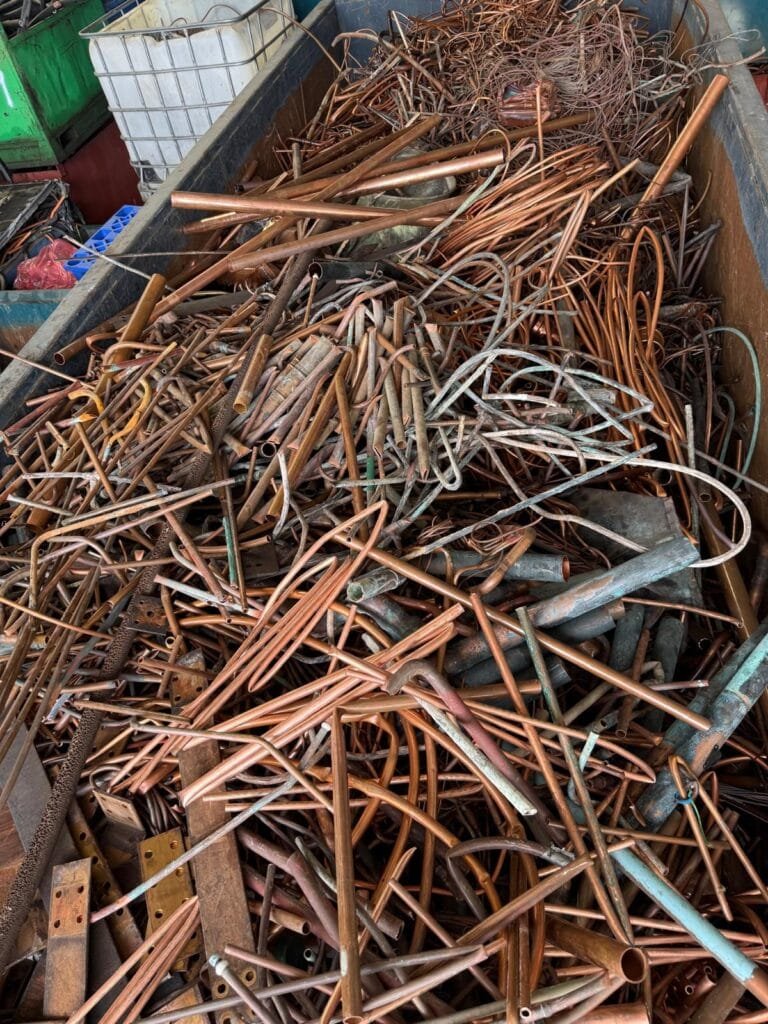
#1 copper is clean, solid copper with nothing attached. Straight lengths of copper water pipe with the joints cut off, busbar from switchboards, clean copper offcuts and thick wire with light tarnish all sit here. A little natural oxidation is accepted; solder, paint and fittings are not.
The quickest test is to look at each end of a pipe. A silver ring means solder, and that piece belongs with #2 unless you cut it off. Our guide on cleaning copper pipe for scrap shows how to cut joints and keep the clean lengths together.
#2 copper: still copper, just not clean
#2 copper is the grade most household and renovation copper ends up in. It is mostly copper, but something on it has to be burnt off or melted out at the refinery. Common reasons copper lands in #2:
- Soldered joints and elbows left on the pipe.
- Paint, varnish or heavy green or black corrosion.
- Tin-plated wire, which looks silver rather than copper coloured.
- Small brass or steel fittings still attached.
- Pipe lagging, tape or insulation that has not been peeled off.
Nothing is wrong with selling #2. If a load is mostly short joints and fittings, the time it takes to clean it is often worth more than the difference in price. The rule we give customers: if most of a length is clean, cut the dirty part off; if most of it is joints, bring it as #2.
Clean copper vs dirty copper
When people search for the clean copper price or the dirty copper price, they usually mean the same split as #1 and #2. Clean copper is #1 (and bare bright, the cleanest of all). Dirty copper is #2: copper with solder, paint, plating, corrosion or fittings. The gap between the two rates is why sorting before you come in pays.

Insulated copper wire and cable
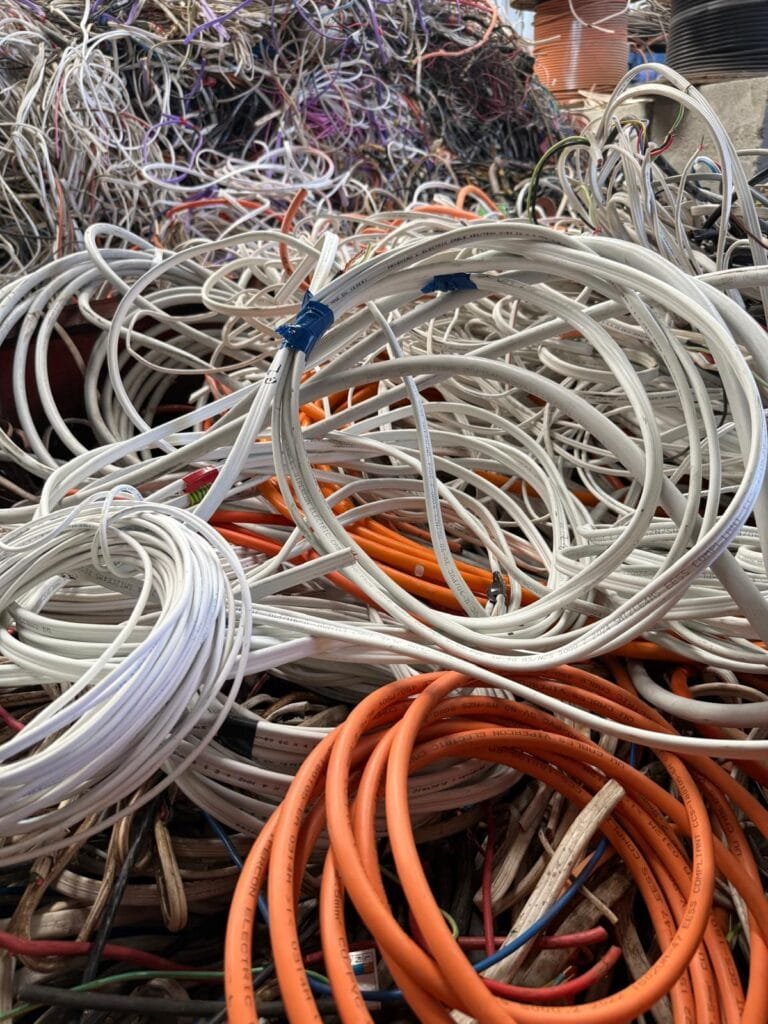
Insulated wire is not one grade. It is priced on its copper recovery, the share of the weight that is copper once the plastic is removed. Heavy power cable can be more than half copper by weight; thin data and communications cable is mostly plastic. Keep thick cable apart from thin cable, cut off plugs, lugs and steel armour, and keep aluminium cable separate. Our copper cable buyers page lists how each type is graded.
Copper that is not graded as copper
Some items contain a lot of copper but are bought as their own category, because the copper is attached to steel or aluminium:
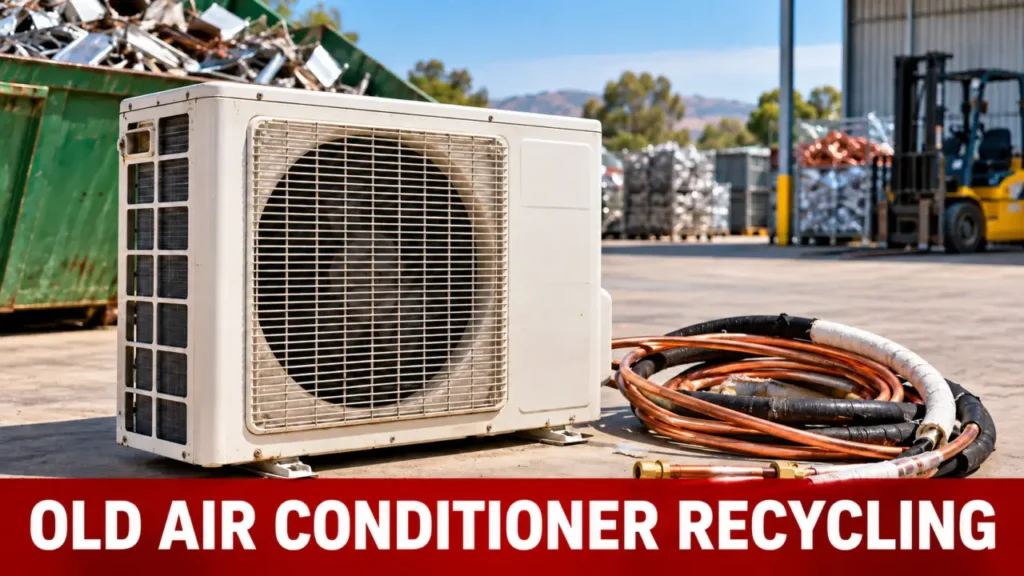
- Copper and aluminium radiators and air conditioner coils are graded as radiators or coils. See our radiator and coil page.
- Electric motors, starters and alternators have copper windings inside steel. See electric motors.
- Compressors from fridges and air conditioners are their own grade. See compressors.
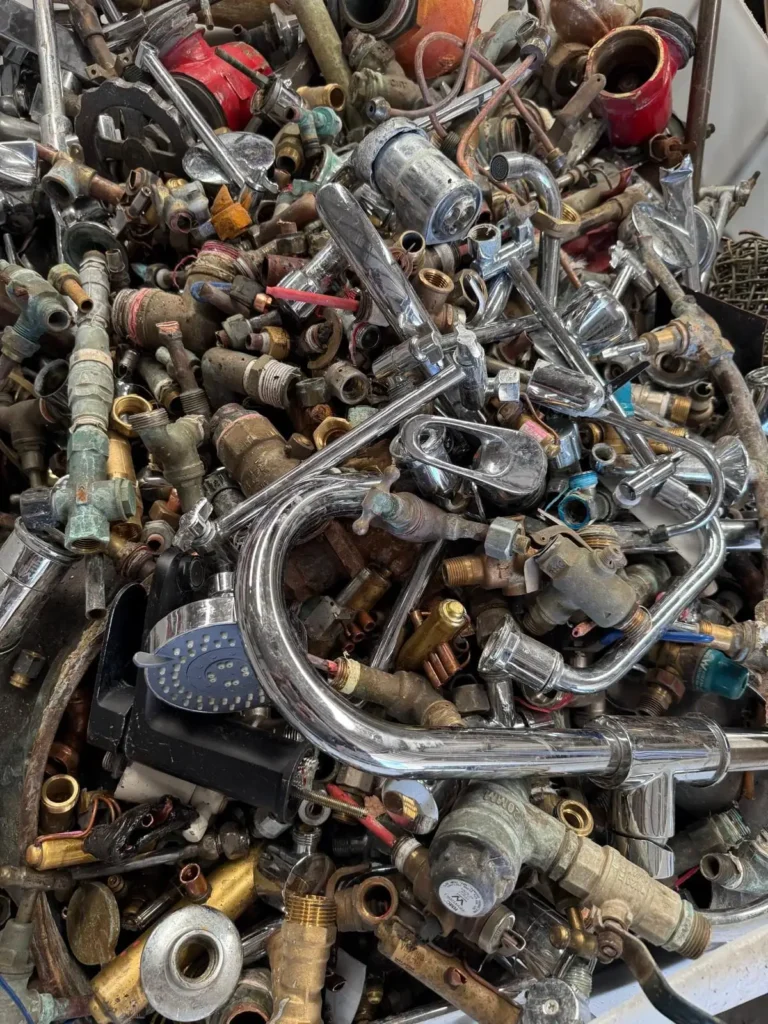
- Brass (taps, valves, fittings) is a copper alloy with its own rate on our brass price page.
How to sort copper at home or on the job
- Set up four containers: bare bright, clean copper (#1), dirty copper (#2) and insulated cable. Add a fifth for brass fittings.
- Use a magnet first. Copper and brass do not stick to a magnet; steel does. Anything that sticks comes out.
- Check the colour. Copper is reddish-brown, brass is yellow-gold, tin-plated wire looks silver.
- Look for solder rings at every pipe end and joint.
- Keep it dry. Water sitting inside pipe and cable adds weight that is not copper, and wet loads are checked more carefully.
- Never burn insulation or paint off. Burning releases toxic fumes, is an offence in South Australia, and leaves the copper oxidised and graded lower.
How grading works at our yard
Bring your copper to SA Copper Scraps at 12 Belfree Dr, Green Fields SA 5107. We go through the load with you, put each grade on certified scales separately, and confirm the rate for each before you are paid, the same visit. If a piece could go either way, we show you why it sits in one grade or the other. Bring current photo ID; South Australian rules require it for every sale. The yard is open Monday to Friday 7:30am to 5:00pm and Saturday 7:30am to 2:00pm.
If you are not sure what you have, bring it in unsorted and we will sort it with you. Sorting it first just means a faster visit and a better overall price for your copper scrap in Adelaide.
Related guides
- Brass vs copper: how to tell them apart
- How to clean copper pipe for scrap
- Is it worth stripping copper wire?
- What scrap metal is worth the most in Adelaide?
Frequently asked questions
What is bare bright copper?
Bare bright copper is clean, uncoated, unalloyed copper wire with no insulation, solder, plating or heavy tarnish. It is the highest-paying copper scrap grade because it needs almost no processing before it is melted into new copper.
What is the difference between #1 and #2 copper?
#1 copper is clean solid copper such as pipe without joints, busbar and clean offcuts. #2 copper is copper with solder, paint, plating, corrosion or fittings still attached, so it pays less per kilo.
Is copper pipe #1 or #2 copper?
Clean copper pipe with the soldered joints and brass fittings cut off is #1. The same pipe with joints, fittings, paint or lagging left on is #2.
How much is clean copper per kg?
Clean copper (bare bright and #1) is the top-paying grade. The current guide range for each grade is on our scrap copper prices page, and the final rate is confirmed at the yard after grading and weighing.
What counts as dirty copper?
Dirty copper is #2 copper: copper with solder, paint, tin plating, corrosion, insulation tape or fittings attached. It is still bought, just at a lower rate than clean copper.
Is tin-plated copper wire bare bright?
No. Tin-plated wire looks silver and is graded as #2 copper, even when it is bare and shiny.
Final word
Four containers and a magnet are all it takes to sort copper scrap properly. Keep bare bright, clean, dirty and insulated copper apart, take the brass off, and every grade is weighed and paid at its own rate.