
Battery pricing does not work like a normal per-kilo metal page. Used lead-acid batteries are assessed by type, condition, quantity and safe handling requirements. Final SA Copper Scraps pricing is confirmed in store after inspection, grading and weighing.
Unlike copper or aluminium, batteries are usually priced per unit rather than per kilo, because the recoverable lead is fairly consistent for a given battery type. Larger and industrial batteries are the exception and are quoted on inspection.
| Battery type | Indicative public benchmark | Pricing note |
|---|---|---|
| Standard car batteries | Around A$6 each | Public Adelaide benchmark for standard passenger vehicle lead-acid batteries. |
| Truck and machinery batteries | Assessed in store | Heavier units carry more recoverable lead and are quoted by type, size and weight. |
| Deep-cycle and marine batteries | Assessed in store | Still lead-acid, but sized and built differently from a standard car battery. |
| Forklift and industrial batteries | Assessed in store | Very heavy and often require equipment to move. Call before bringing these in. |
| Bulk and trade quantities | Assessed in store | Workshop, fleet and farm loads are quoted separately from single walk-in batteries. |
| Damaged or leaking batteries | Assessed in store | Usually still recyclable, but handling requirements are confirmed before value is discussed. |
Not sure what to do with an old battery? Our guide covers where to recycle car batteries in Adelaide, why they cannot go in the kerbside bin, and how to transport one safely.
Read the guideThe page is built for quick decisions before visiting the Green Fields yard. Use it to identify the battery type, prepare the load and understand what the team checks in store.
Car, truck, marine, deep-cycle or industrial. Type matters more than weight on this page.
Batteries travel upright and should not be stacked loose or mixed with general rubbish.
Call 08 7225 9998 for current guidance, then bring batteries to 12 Belfree Dr, Green Fields SA 5107.
Batteries are inspected, sorted by type and weighed, then paid before you leave.
Identify what you have before calling, since different battery types are assessed in different ways.
The most common category. Typically 15-20kg, priced per unit and checked quickly by type and condition.
Heavier units with more recoverable lead. Assessed by type, size and weight rather than a flat unit rate.
Built for sustained discharge rather than starting current, but still lead-acid and still recyclable.
Accepted, but very heavy and often needing equipment to move. Always call before bringing these in.
Cracked, swollen or leaking cases can usually still be recycled, but tell us before you arrive so handling can be arranged.
A different chemistry with different fire-risk and handling rules. Call first so we can confirm what can be accepted.
Two batteries that look similar can pay differently. These are the factors assessed in store.
Car, truck, marine, forklift and industrial batteries all carry different amounts of recoverable lead.
Larger cases hold more lead, which is why heavier batteries are quoted individually rather than at a flat unit rate.
Cracked, leaking or badly damaged casings are harder to handle safely and may be assessed differently.
Trade and bulk loads are quoted separately from single walk-in batteries, so call ahead with numbers.
Battery rates follow the underlying lead price, which shifts with global commodity markets.
Batteries should arrive whole. Opened, drained or dismantled units are unsafe and cannot be assessed normally.
Sorted, undamaged batteries are quicker to assess, which is the simplest way to protect the value of your load.
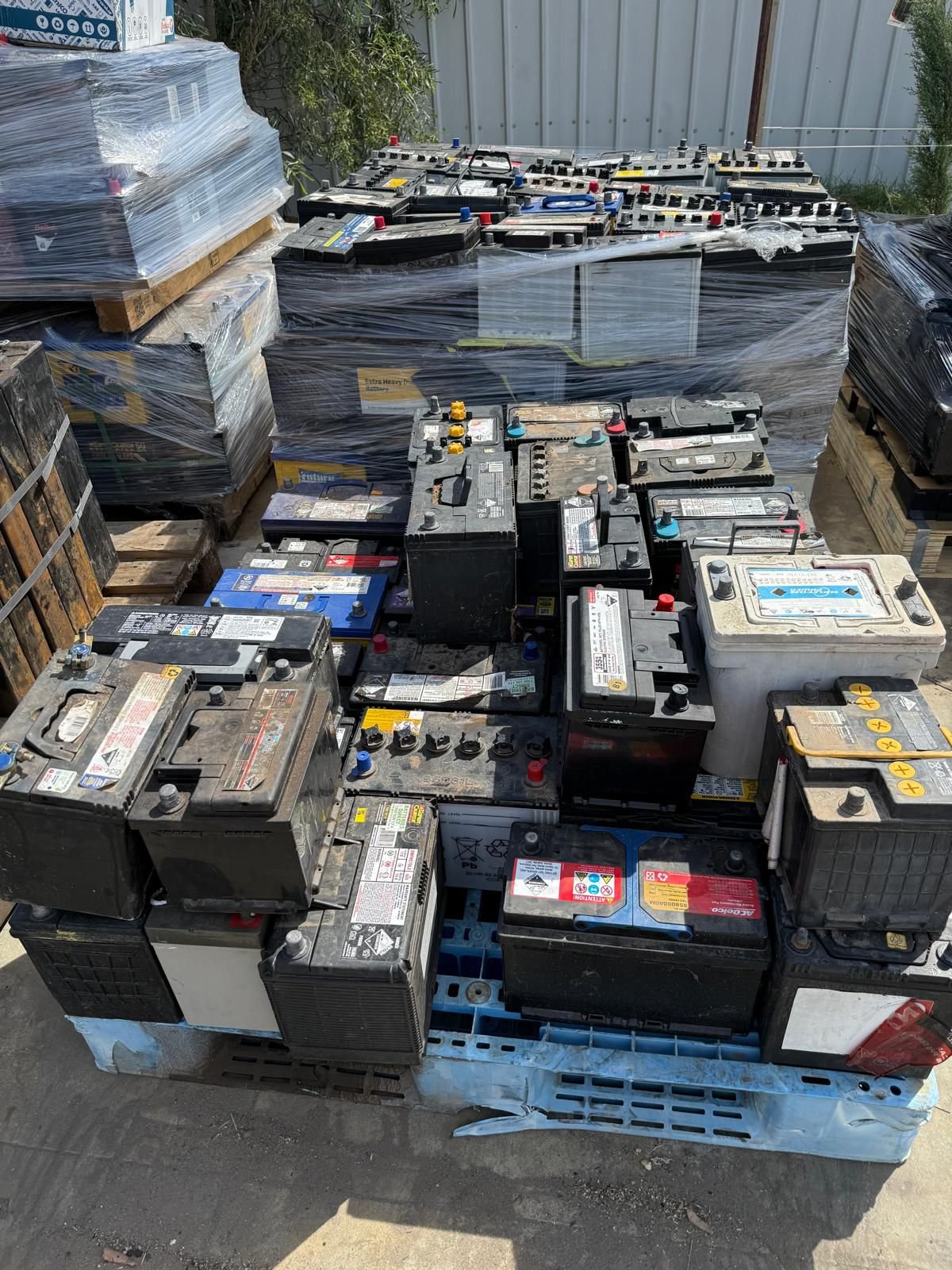
Lead-acid batteries contain lead and sulfuric acid. A few basic precautions keep the load safe to transport and quick to assess on arrival.
These examples show why the final price is confirmed only after the batteries are seen and weighed.
Checked quickly by type and condition, then paid at the current in-store unit rate.
Quantity and handling affect the quote. Call ahead so the team can prepare and give accurate guidance.
Safety condition is confirmed first, then the battery is assessed. Most are still recyclable.
Being clear about how a price guide is built matters when the numbers move week to week.
Guide figures are compiled from publicly available Australian and Adelaide scrap market references, last reviewed 25 September 2026.
Battery rates follow the lead market. We review these figures when the market moves and at least monthly.
Published figures are indicative. Your actual payout is set in store after the batteries are inspected and weighed.
These links stay focused on closely related material types rather than repeating the same block as every other price guide.
Real Google reviews from people who sell copper, brass, aluminium and other scrap metal at our Green Fields yard.
“Friendly staff, easy access, great pieces.”
“Perfect for plumbers. Quick, great rates, no messing around.”
“Very well priced and very good customer service like always.”
Standard passenger car batteries sit around A$6 each (truck batteries around A$8) on current public Adelaide benchmarks. Truck, marine, forklift and bulk loads are quoted separately. The final amount is confirmed in store once the batteries are inspected and weighed.
Standard car batteries are usually priced per unit rather than per kilo, because the recoverable lead is fairly consistent for a given battery type. Heavier truck and industrial batteries are the exception and are assessed by size and weight.
Yes. Batteries are inspected, sorted by type and weighed, and payment is made before you leave. There is no disposal fee, because the recovered lead has value.
Yes. Workshops, fleet operators and farms can bring pallets or crates of batteries to our Green Fields yard. Call 08 7225 9998 with the battery type and quantity first.
Yes. These are all lead-acid and all accepted, but they are heavier than a car battery and assessed individually. Call first for forklift and industrial units so handling can be arranged.
Mention it when you call. Damaged batteries can usually still be recycled, but they need careful handling and should be kept separate from undamaged units.
No. Do not attempt to open, drain or dismantle it. Bring the battery whole and keep it upright during transport.
Lithium-ion batteries have different handling and fire-risk requirements from lead-acid batteries. Call before bringing any lithium or EV battery in so we can confirm what can be accepted.
There is no set limit, but call ahead for larger loads so the team can prepare and give accurate pricing guidance for the quantity.
No. These are public market guide figures reviewed in September 2026. Final pricing is confirmed after batteries are inspected, sorted and weighed in store.
Public scrap guides use different update times, battery assumptions and market references. Treat any online figure as guidance until the yard checks your exact batteries.
Bring batteries to 12 Belfree Dr, Green Fields SA 5107. They are inspected, sorted, weighed and paid for in store.
Customers bring batteries to the Green Fields yard from suburbs right across metropolitan Adelaide.
Call SA Copper Scraps or request a quote before visiting. Final pricing is confirmed in store after batteries are inspected, sorted and weighed.