Every week someone in Adelaide finds themselves standing over a pile of old pipe, wire or fittings, wondering two things: what’s it actually worth, and where do you even take it? Most guides answer the first question with a vague range and skip the second entirely.
This one does both properly. It covers what determines a fair price for copper scrap, how to sort it before you go anywhere, and exactly how the selling process works at a real Adelaide yard — including the part almost nobody mentions: what you need to bring.
Quick answer
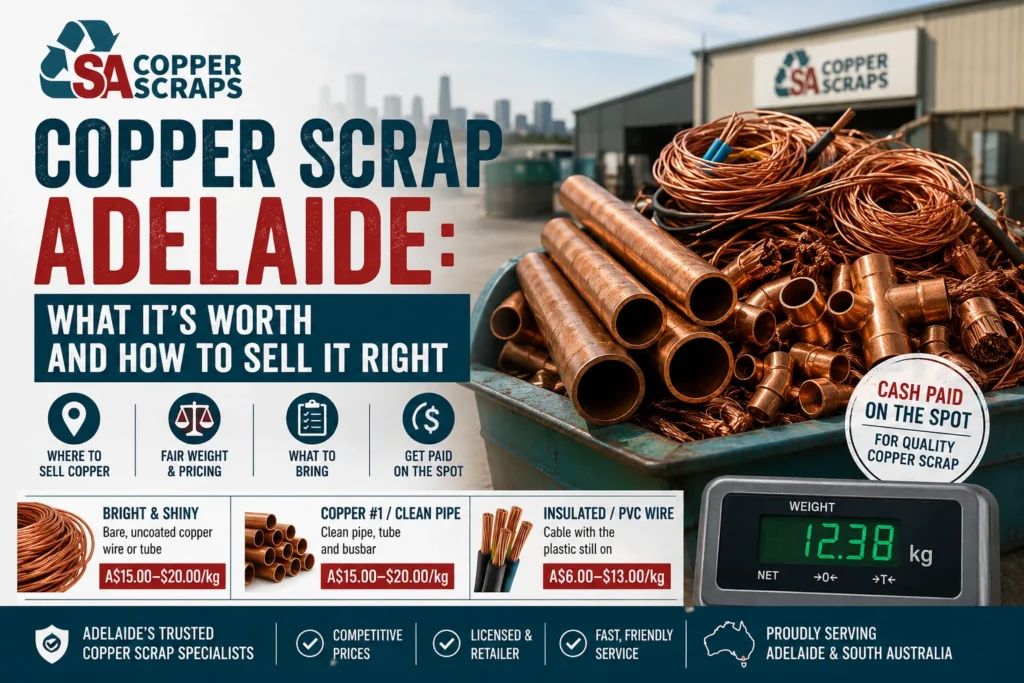
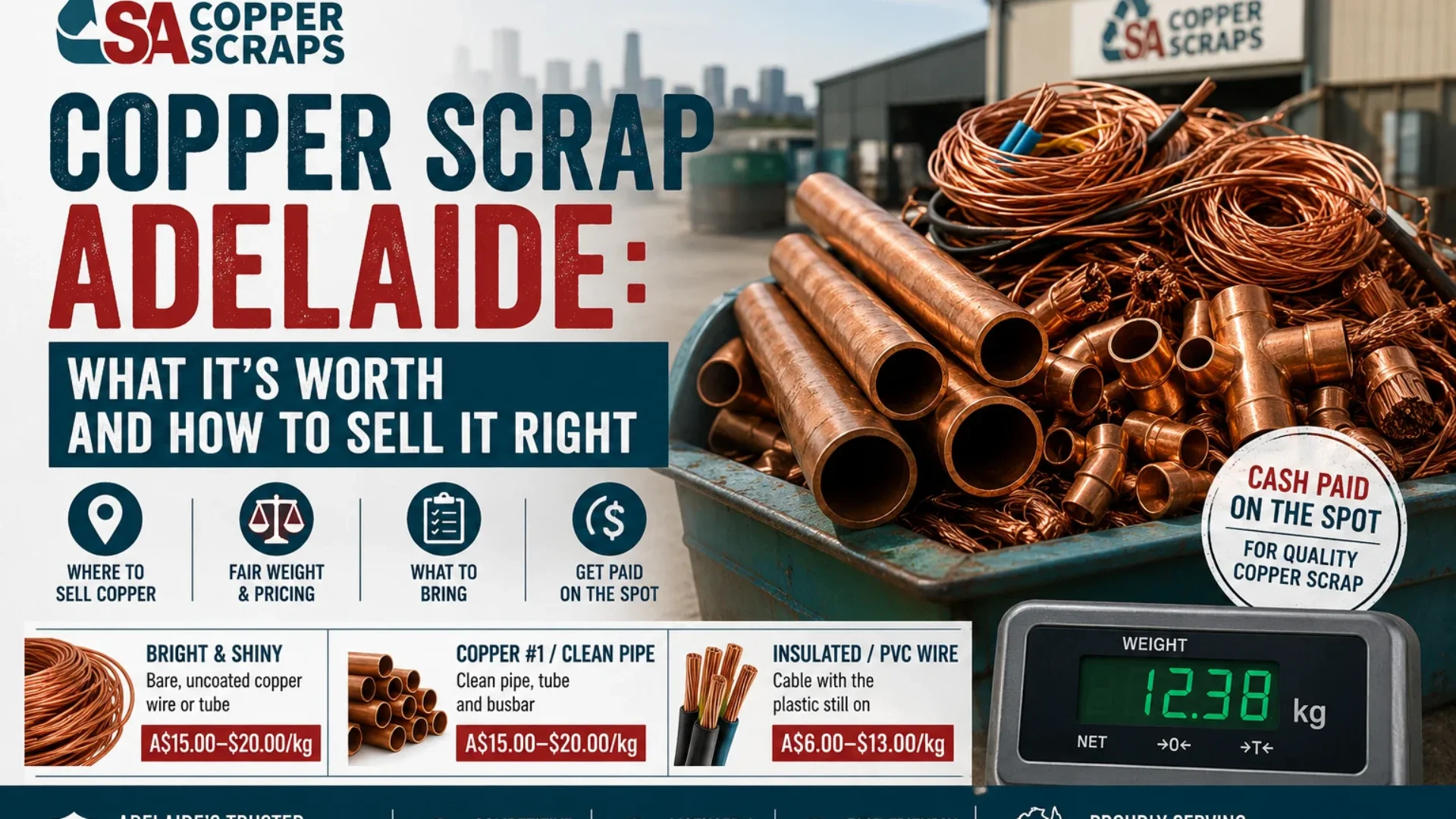
Copper is the most valuable common metal you’re likely to have lying around, and clean grades currently sit around A$15.00–$20.00/kg in Adelaide, with insulated wire around A$6.00–$13.00/kg. Sort it by grade, bring photo ID, and take it to a registered yard where it’s weighed on certified scales and paid for on the spot. For current benchmarks, see our copper scrap price page.
Why copper is worth sorting for
Copper conducts electricity and heat better than almost any affordable metal, doesn’t degrade when melted down and reused, and is in permanent demand for construction, electronics and manufacturing. That combination is why it consistently prices well above steel, aluminium or brass, and why it’s worth the extra ten minutes of sorting that most other scrap doesn’t reward.
The grades, and why they matter
Not all copper is priced the same, and the difference between grades is the single biggest factor in what you’re paid.
| Grade | What it is | Indicative price |
|---|---|---|
| Bright & Shiny | Bare, uncoated copper wire or tube with no corrosion | A$15.00–$20.00/kg |
| Copper #1 / clean pipe | Clean pipe, tube and busbar, no solder or fittings | A$15.00–$20.00/kg |
| Insulated / PVC wire | Cable with the plastic still on, priced on copper recovery | A$6.00–$13.00/kg |
The pattern holds across every yard: the less work needed to turn what you bring in into clean, usable copper, the more it’s worth. A bin of bare bright wire and a box of soldered, painted pipe are not the same material even though both say “copper” — and a yard that pays the same for both isn’t grading properly.
Where copper hides around the house
- Electrical wiring and cable offcuts from a renovation or rewire
- Old plumbing pipe and fittings, especially from bathroom or kitchen jobs
- Hot water systems and heat exchangers
- Air conditioning units and refrigeration coils
- Electric motors, transformers and other electrical components
- Roofing flashing and guttering offcuts
- Old power cords, extension leads and appliance cabling
Electricians, plumbers, air conditioning technicians and demolition contractors generate the most volume, but a garage clean-out or a house clearance regularly turns up worthwhile amounts too.
How to get the best price
- Sort by grade. Keep bright wire, clean pipe and insulated cable in separate piles rather than one mixed bin.
- Strip where it’s worth it. Bare copper pays considerably more than insulated wire. For a large quantity of heavy cable, stripping usually pays for the time it takes.
- Remove attachments. Solder, brass fittings and steel brackets pull clean pipe down a grade.
- Keep it dry. Wet material weighs more but grades worse, and a yard will account for that.
- Check the rate before you drive. Copper prices move daily with the global market, so a quick call confirms what you’ll actually be offered.
One thing not worth doing: burning insulation off wire to save the stripping time. It’s illegal, releases toxic fumes, and oxidises the copper underneath — burnt copper grades down, not up.
How to tell if it’s actually copper
Not everything that looks like copper is copper. Three checks, no tools required:
- Magnet test. Copper isn’t magnetic. If a magnet sticks, it’s steel — possibly copper-plated, which is worth far less.
- Colour test. Copper is reddish-orange. Yellow-gold usually means brass, which is still valuable but priced differently.
- Scratch test. Scratch an inconspicuous spot. Genuine copper is the same colour all the way through.
Where to sell copper in Adelaide — and how the process actually works
This is the part most guides skip. Once you’ve sorted your copper, here’s what actually happens when you bring it to a yard:
1. Bring photo ID
A driver licence or equivalent for whoever is selling. Registered scrap dealers are required to record who they buy from — this protects legitimate sellers as much as it deters theft, and it’s a normal, quick part of the process rather than something to worry about.
2. Assessment and grading
The material is inspected and sorted by grade. This is where the sorting you did at home pays off — clean, separated copper is assessed quickly and accurately, while mixed loads take longer and may grade toward the lowest material present.
3. Weighing on certified scales
Your copper is weighed in front of you on calibrated digital scales. You should see every reading — if a yard weighs out of sight, that’s worth questioning.
4. Payment on the spot
Once the grade and weight are confirmed, payment is made immediately — cash or bank transfer, no invoicing, no waiting period.
Some Adelaide yards also offer collection for larger commercial or trade volumes, though this varies by business and is worth confirming directly rather than assuming.
Selling copper at SA Copper Scraps
- Sort your copper by grade at home where practical.
- Call 08 7225 9998 with roughly what you have for guidance before you travel.
- Bring photo ID and your copper to 12 Belfree Dr, Green Fields SA 5107.
- It’s graded and weighed on certified scales in front of you, and you’re paid before you leave.
We buy the full range of scrap metals beyond copper too — see our scrap prices hub for brass, aluminium, lead, steel and more, or our cable scrap price guide if most of what you have is insulated wire. If you’re clearing out other metal alongside copper, our scrap metal buying page covers mixed loads and larger clean-outs.
Frequently asked questions
Where can I sell copper in Adelaide?
Bring it to a registered scrap metal buyer with a fixed yard, such as SA Copper Scraps at 12 Belfree Dr, Green Fields SA 5107. Material is graded, weighed on certified scales in front of you, and paid for on the spot.
What is copper scrap worth in Adelaide right now?
Clean bright and shiny copper and #1 copper pipe currently sit around A$15.00–$20.00/kg on public Adelaide benchmarks, with insulated PVC wire around A$6.00–$13.00/kg. Rates move daily with the global copper market, so confirm the current rate before you travel with a large load.
Do I need ID to sell copper?
Yes. Registered scrap metal dealers are required to sight identification for transactions, which helps prevent the sale of stolen metal and protects legitimate sellers. Bring a driver licence or equivalent photo ID.
Do I need to strip the insulation off wire before selling it?
It isn’t required, but stripped bare copper pays a noticeably higher rate than insulated wire. For a large quantity of heavy cable, it’s usually worth the time; for small amounts it often isn’t.
How do I know if my scrap is really copper?
Copper isn’t magnetic, so a magnet sticking means it’s steel or copper-plated steel. Genuine copper is reddish-orange rather than yellow, and scratching an inconspicuous spot should show the same colour underneath if it’s solid copper.
Can businesses arrange regular copper collection?
Some Adelaide yards offer scheduled collection for electricians, plumbers and demolition companies generating consistent volumes. This varies by business, so call ahead to confirm what can be arranged.
How quickly is payment made?
At a properly run yard, payment follows immediately after weighing and grading — cash or bank transfer, with no invoicing or waiting period.
What’s the difference between #1 and #2 copper?
#1 copper is clean pipe, tube or busbar with no solder, paint or fittings attached. #2 copper is the same material with minor coatings, tarnishing or fittings still on it, and prices lower because it needs more processing.
Is it worth sorting mixed scrap before selling?
Yes, particularly for copper. A mixed load gets graded toward its lowest-value component, so separating bright wire from painted pipe and insulated cable usually means a meaningfully better result.
Where does copper commonly come from around the house?
Electrical wiring, old plumbing pipe, hot water systems, air conditioner coils, electric motors, and roofing flashing are the most common sources. A single renovation or clean-out can turn up a surprising amount.
Sort it, bring ID, and call ahead
Copper scrap in Adelaide is straightforward to sell once you know the three things that actually matter: sort it by grade, bring identification, and confirm the current rate before you drive anywhere.
Call 08 7225 9998, or check current copper scrap prices.