Topic: Grading and Sorting
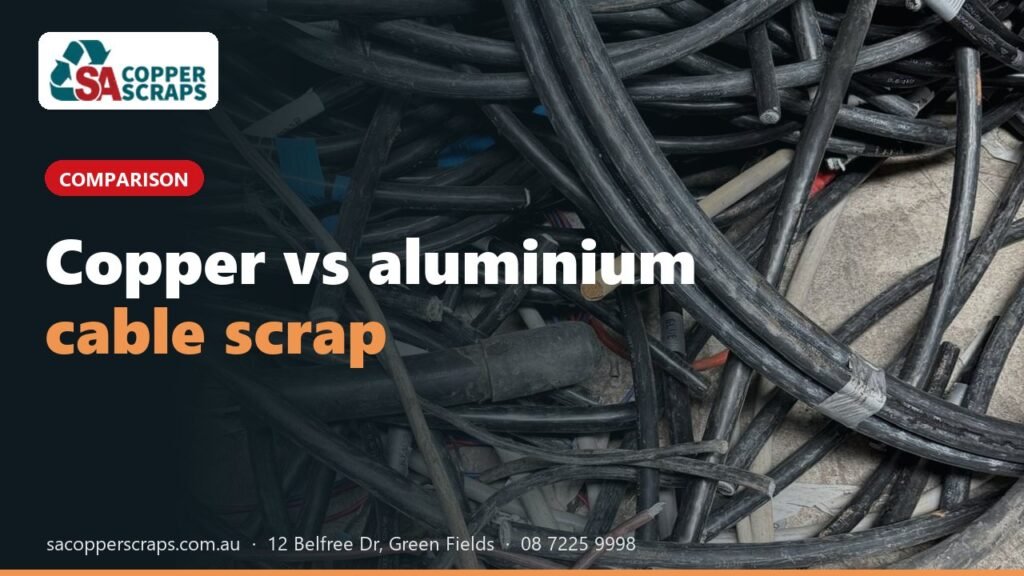
Copper vs aluminium cable scrap: copper cable pays far more per kilo, because copper is worth several times as much as aluminium. The two can look alike from the outside, so check the cut end before you sort: copper is reddish-brown, aluminium is silver-white and much lighter. Keep them apart, because a mixed bundle is usually graded at the aluminium rate.
This guide shows how to tell copper cable from aluminium cable, the look-alikes that catch people out, and how each is sold at a scrap yard in Adelaide.
The short answer
- Copper cable is paid on its copper recovery, at copper rates.
- Aluminium cable is paid at the much lower aluminium cable rate.
- Check the cut end: reddish-brown is copper, silver-white is aluminium.
- Tinned copper looks silver but is copper underneath.
- Copper-clad aluminium looks like copper but is mostly aluminium.
- Never mix them: sort before you come.
How to tell copper cable from aluminium cable
- Look at the cut end. Copper conductors are reddish-brown; aluminium is silver-white. Scratch a dull end with a knife to see the true colour.
- Feel the weight. Aluminium is about a third as dense as copper, so an aluminium cable feels light for its size.
- Read the sheath. Many cables are printed with the conductor material and size, such as “Cu” for copper or “Al” for aluminium.
- Look at the size. Aluminium cable is usually thicker than copper cable for the same job, because aluminium carries less current for the same size.
- Bend it. Aluminium conductors are softer and kink more easily.
The look-alikes
Tinned copper
Some copper wire is coated with a thin layer of tin, so it looks silver. Scratch it and copper shows underneath. It is still copper and is bought as copper cable or #2 copper, not as aluminium.
Copper-clad aluminium (CCA)
Cheaper data cables, speaker wire and some extension leads use aluminium wire with a thin copper coating. It looks like copper on the outside, but the cut end shows a silver core, and it feels light. Most of its weight is aluminium, so it is graded with low-value cable, not as copper.
Why aluminium cable pays less
Copper is worth several times as much as aluminium per kilo on the world metal markets, and the price you are paid for each cable follows its metal. A kilo of aluminium cable also contains fewer kilos of high-value metal than copper cable of the same weight. That is why sorting is so important: a few lengths of aluminium mixed into copper cable can pull the whole bundle down to the lower rate.
Where you will find aluminium cable
- Older underground mains and consumer service cables.
- Large commercial and industrial supply cables.
- Overhead line conductors.
- Some solar and battery installations, for long runs.
Household building wire and most extension leads are copper, but check anything heavy before you bundle it.
How we buy cable at our Green Fields yard
Bring your cable sorted into copper and aluminium, with thick copper cable apart from thin. Cut off plugs, lugs and steel armour if you can. At SA Copper Scraps, 12 Belfree Dr, Green Fields SA 5107, each type is graded and weighed separately in front of you and paid the same visit. See our copper cable buyers page for how copper cable is graded, and our aluminium scrap price page for aluminium.
Related guides
Frequently asked questions
Is copper or aluminium cable worth more as scrap?
Copper cable is worth far more per kilo, because copper is worth several times as much as aluminium. Aluminium cable is bought at its own, lower rate.
How can I tell if a cable is copper or aluminium?
Look at the cut end. Copper is reddish-brown and heavy; aluminium is silver-white and light. Many cables also have “Cu” or “Al” printed on the sheath.
Is silver-looking wire aluminium?
Not always. Tinned copper wire looks silver but shows copper when scratched. Aluminium is silver all the way through.
What is copper-clad aluminium cable worth?
Copper-clad aluminium is mostly aluminium with a thin copper coating, so it is graded as low-value cable rather than copper cable.
Final word
Check the cut end, sort copper from aluminium, and watch for tinned copper and copper-clad aluminium. That one habit protects the copper rate on your whole cable load.