Topic: Value Guides
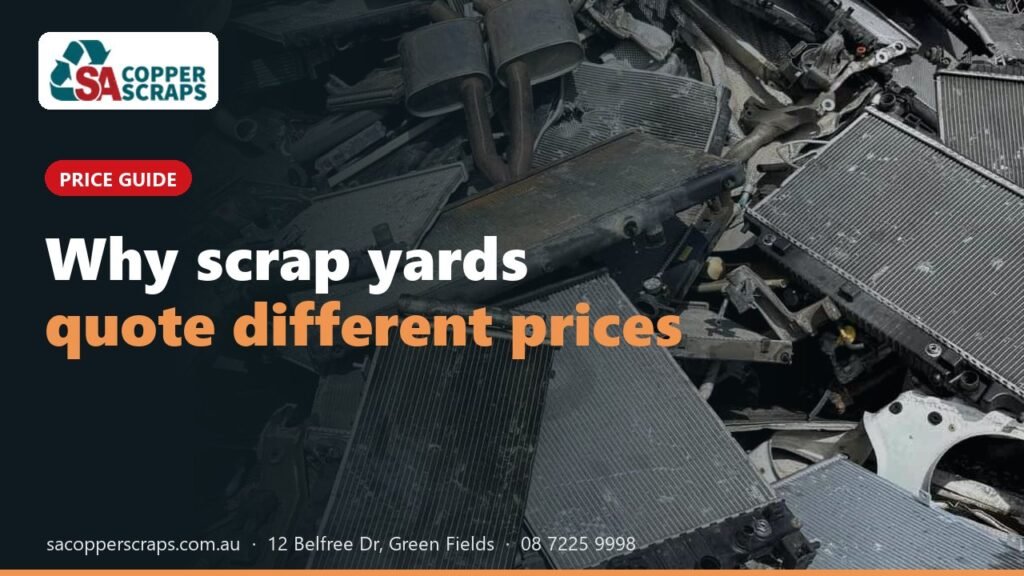
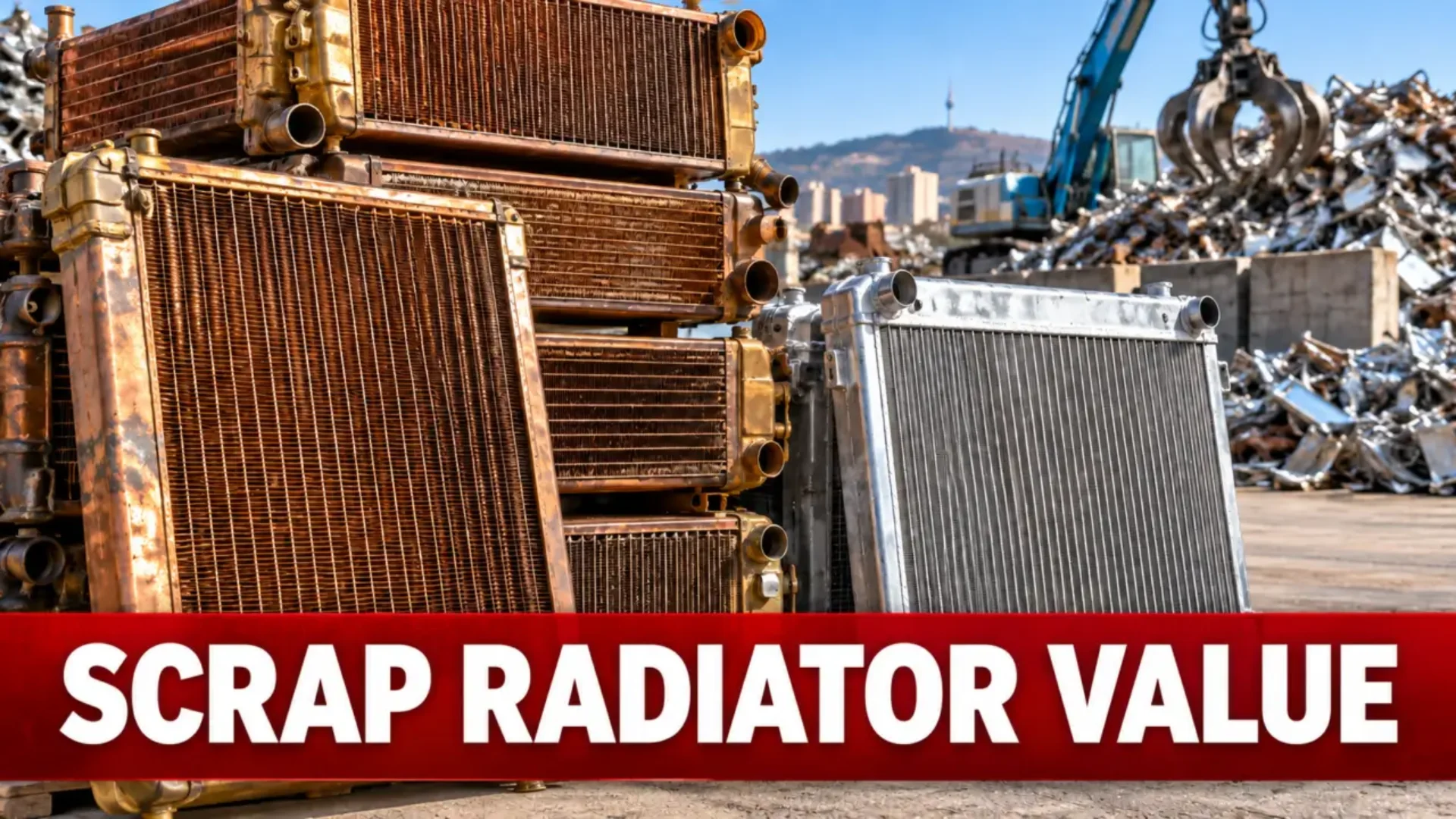
Old copper-brass radiators are worth considerably more as scrap than modern aluminium ones. The type of radiator decides the value far more than its size, and most people cannot tell which they have.
This guide shows how to identify your radiator, what makes one worth more than another, and how to prepare it safely.
The two main radiator types
| Radiator type | Value | How to spot it |
|---|---|---|
| Copper-brass | Higher | Heavy, reddish or brass-coloured, metal tanks |
| Aluminium | Lower | Light, silvery core, usually plastic tanks |
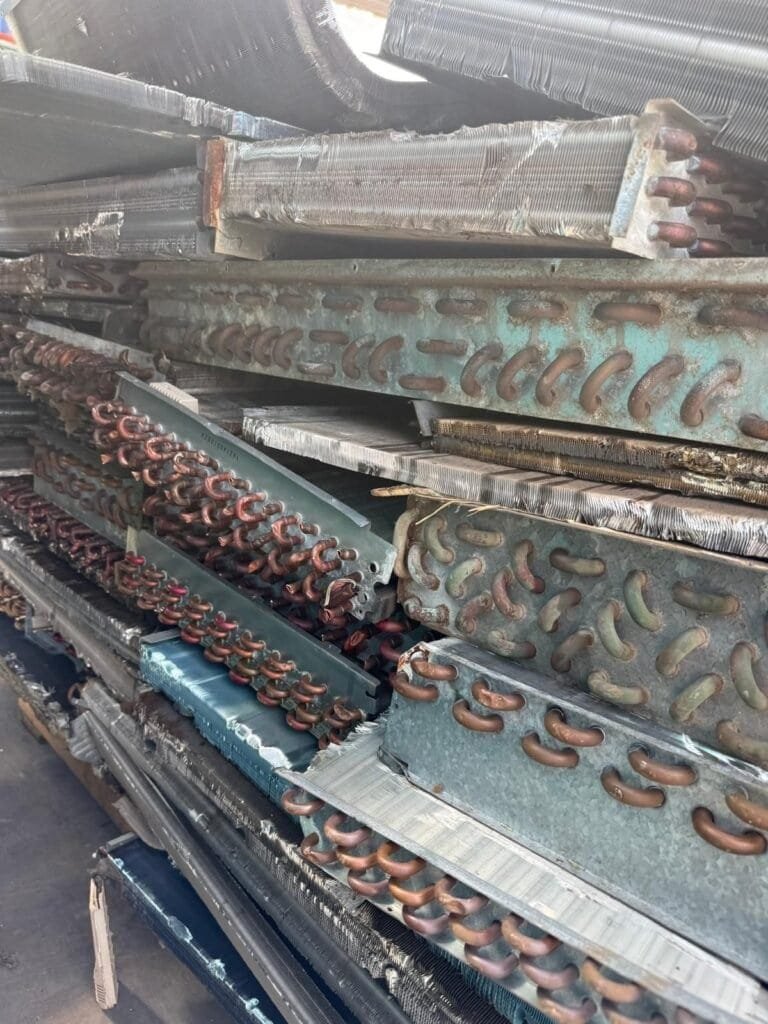
| Aluminium-copper (ACR) | Mid | Copper tubes with aluminium fins – aircon coils |
Radiators are assessed in store rather than priced at a flat rate. See radiator scrap prices for current guidance, or call 08 7225 9998.

Copper-brass radiators
Older vehicles, trucks, tractors and industrial machinery used copper-brass radiators. Copper tubes and fins, with brass tanks at the top and bottom.
Heavy for their size.
Reddish-copper or brass-coloured, though often painted black.
Metal tanks — both top and bottom tanks are brass.
Soldered joints.
These are the valuable ones. Because they are mostly copper and brass, they carry real value — a large truck radiator can be worth a meaningful amount. For more on brass, see what scrap brass is worth.
Aluminium radiators
Most modern cars use aluminium radiators, usually with plastic tanks.
Light for their size.
Silvery aluminium core.
Plastic tanks — usually black or grey plastic on the sides or top.
Crimped rather than soldered.
The plastic tanks lower the value, since they add weight that is not metal. Removing them helps where practical. For more on aluminium grades, see what scrap aluminium is worth.
Aircon and refrigeration coils
Air conditioning and refrigeration coils are a related item — copper tubes with aluminium fins, often called ACR or copper-aluminium radiators. They sit between copper-brass and aluminium in value.
If you have a whole air conditioner rather than a loose coil, see our guide to getting rid of an old air conditioner.
Drain the coolant first
Radiators must be drained before you bring them in.
Engine coolant is toxic. It usually contains ethylene glycol, which is sweet-tasting and highly poisonous to pets and children. Drain it into a sealed container and dispose of it through an automotive shop or council waste facility — never onto the ground or into a drain.
Drain completely before transport.
Cap or plug the inlet and outlet to prevent drips.
Carry in a tub or on a tarp in the vehicle.
Wash your hands after handling.
What lowers radiator value
Plastic tanks on aluminium radiators.
Steel brackets and mounts left attached.
Remaining coolant — radiators must be drained.
Rubber hoses left connected.
Heavy corrosion or damage.
Remove steel brackets and hoses where it is safe to do so. Keep copper-brass radiators separate from aluminium ones — our guide to sorting scrap metal before selling covers how to separate a mixed load.
Selling radiators in Adelaide
Bring drained radiators to SA Copper Scraps at 12 Belfree Dr, Green Fields SA 5107. Copper-brass and aluminium radiators are assessed separately, weighed on calibrated scales and paid before you leave.
For workshop volumes, call 08 7225 9998 first. See our radiator buying service for trade loads.
Frequently asked questions
What are scrap radiators worth?
It depends mainly on type. Copper-brass radiators are worth considerably more than aluminium radiators because they are mostly copper and brass. Radiators are assessed in store rather than priced at a flat rate.
How do I tell a copper radiator from an aluminium one?
Copper-brass radiators are heavy, reddish or brass-coloured, with metal tanks. Aluminium radiators are light and silvery, and usually have plastic tanks.
Are copper radiators worth more?
Yes. Copper-brass radiators carry significantly more value than aluminium ones, because copper and brass are worth far more per kilo than aluminium.
Do I need to drain the coolant first?
Yes. Radiators must be fully drained. Engine coolant is toxic and must be disposed of properly, never onto the ground or into a drain.
Should I remove the plastic tanks from an aluminium radiator?
It helps where practical, since plastic adds weight that is not metal. Radiators are accepted with tanks on, but removal can improve the grade.
What is an ACR radiator?
ACR refers to aluminium-copper radiators or coils — copper tubes with aluminium fins, commonly from air conditioning and refrigeration. They sit between copper-brass and aluminium in value.
Do you buy truck and tractor radiators?
Yes. Older truck, tractor and machinery radiators are often copper-brass and can be worth a meaningful amount.
Are painted radiators still worth money?
Yes. Many copper-brass radiators are painted black. Paint does not stop them being accepted, though it may affect the rate slightly.
Should I remove hoses and brackets?
Yes, where it is safe to do so. Rubber hoses and steel brackets reduce the grade.
Where can I sell scrap radiators in Adelaide?
SA Copper Scraps buys radiators at 12 Belfree Dr, Green Fields SA 5107. They are assessed by type, weighed on calibrated scales and paid before you leave.
Final word
Check the tanks first — metal means copper-brass and higher value, plastic means aluminium. Drain the coolant, pull the hoses and brackets, and keep the two types apart.
Call 08 7225 9998, or see current radiator scrap prices.