Your car battery has finally died. It’s sitting in the garage, it’s heavier than it looks, and you have a vague sense you’re not supposed to just put it in the wheelie bin. You’re right — you’re not.
The good news is that an old car battery is one of the easiest things to recycle, and unlike most household waste, someone will actually pay you for it. This guide covers where to take old car batteries in Adelaide, why they can’t go in your kerbside bin, how to move one safely, and roughly what you can expect to get for it.
The short answer
Take it to a scrap metal yard or battery recycler. Do not put it in any household bin. Most Adelaide scrap yards, including our car battery collection service at Green Fields, accept used car batteries and pay cash for them on the spot.
If you have several batteries, or they’re too heavy to move, many yards will collect them from you. You don’t need to remove anything from the battery, clean it, or drain it — bring it as it is.
Why old car batteries can’t go in the bin
A standard car battery is a lead-acid battery. That means two things are inside it that make kerbside disposal a genuinely bad idea:
- Lead — a heavy metal that is toxic to people and wildlife, and that contaminates soil and groundwater when it ends up in landfill.
- Sulfuric acid — corrosive enough to burn skin, damage waste equipment, and leak into the environment if the casing cracks.
Batteries in kerbside bins are also a fire risk once they’re crushed in a collection truck. This is why used lead-acid batteries are treated as hazardous waste rather than general rubbish, and why councils and recyclers ask that they be dropped off separately.
There’s an upside to all this, though. Lead-acid batteries are among the most successfully recycled products in the world — the lead, plastic casing and acid can all be recovered and reused. Almost nothing in the battery has to be wasted, which is exactly why recyclers are willing to pay for them rather than charge you to take them.
Where to take old car batteries in Adelaide
You have several options, and which one suits you depends mostly on how many batteries you have.
1. A scrap metal yard
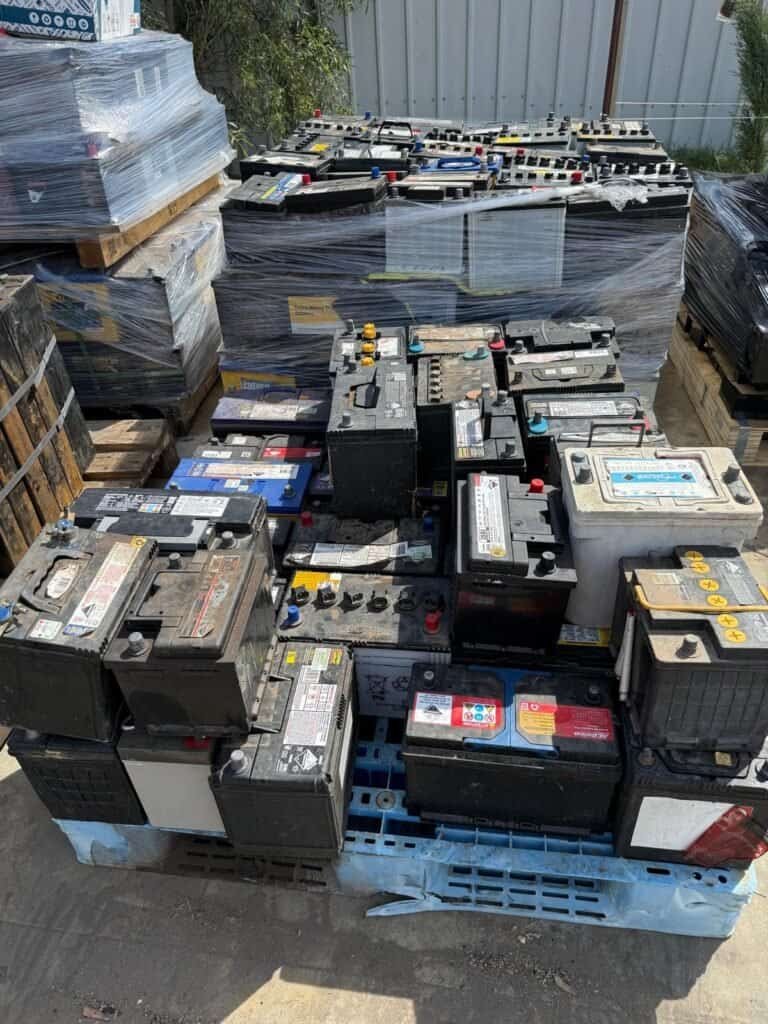
This is the option that pays. Scrap yards buy used lead-acid batteries by the unit or by weight, assess them on arrival, and pay cash. If you want to actually get money back rather than just dispose of the battery, this is the route.
SA Copper Scraps accepts car batteries at 12 Belfree Dr, Green Fields SA 5107. Batteries are checked, weighed and paid for in store. Call 08 7225 9998 before you come in if you have a large or unusual load. We also buy a full range of other scrap metals if you’re clearing out more than just batteries.
2. Collection or pickup
If you’re a mechanic, workshop, fleet operator or farm with batteries accumulating, you generally don’t need to transport them yourself. Most scrap yards will arrange collection for worthwhile quantities. This is usually the most practical option once you’re past three or four batteries, simply because of the weight — a typical car battery runs 15–20kg, and truck batteries are considerably heavier.
3. Auto parts retailers and battery shops
Many battery retailers will take your old battery when you buy a replacement, sometimes offering a small trade-in credit. This is convenient if you’re replacing the battery anyway, though a scrap yard will typically pay more for the battery on its own.
4. Council waste and recycling depots
Most South Australian council transfer stations and recycling depots accept household hazardous waste including car batteries. This is a fine option for disposal, but it’s disposal only — you won’t be paid. Check your local council’s website for opening times and whether any fee applies.
What is an old car battery actually worth?
Battery pricing doesn’t work like most scrap metal. Rather than a straightforward per-kilo rate, used lead-acid batteries are usually assessed by type, condition and quantity — a standard passenger car battery is often priced per unit, while bulk and industrial batteries are quoted differently.
As a public guide, standard car batteries in the Adelaide market have recently sat around A$6 each, though this moves with the lead market and varies with the battery’s size and condition. Truck, marine, forklift and deep-cycle batteries are heavier and generally assessed separately.
A few things affect what you’ll be offered:
- Battery type — car, truck, marine, forklift and industrial batteries are all valued differently.
- Weight and size — larger batteries hold more recoverable lead.
- Condition — cracked, leaking or badly damaged casings are harder to handle safely and may be priced lower.
- Quantity — trade and bulk loads are usually quoted separately from single walk-in batteries.
- Lead market movement — the underlying lead price shifts, and battery rates move with it.
For the current guide rates, see our car battery scrap prices. Published figures are always indicative — the final amount is confirmed once the batteries are inspected and weighed in store.
How to handle and transport a car battery safely
Batteries are heavy and contain acid, so a few basic precautions are worth taking:
- Keep it upright. Always carry and transport the battery the right way up so acid can’t escape through the vents.
- Lift with care. A car battery typically weighs 15–20kg with the weight concentrated in a small box — lift with your legs, or get help.
- Don’t stack loose batteries on top of each other. Terminals can short against the casing above them.
- Put it in the boot or tray, not the cabin. Use a plastic tub or tray to contain any leakage.
- Avoid touching the terminals together, and keep metal tools clear of them.
- If the case is cracked or leaking, say so when you call. Damaged batteries need different handling, and the yard will want to know before you arrive.
- Wash your hands afterwards, and don’t let acid residue contact skin, eyes or clothing.
What about other battery types?
Not every battery is a lead-acid car battery, and they aren’t all handled the same way.
- Truck, marine and deep-cycle batteries — usually still lead-acid, accepted and assessed by size and weight.
- Forklift and industrial batteries — accepted, but call first; these are very heavy and often need equipment to move.
- Lithium-ion batteries (EV packs, power tools, laptops, phones) — a different chemistry with different handling and fire-risk requirements. Do not assume a scrap yard takes these; call and ask before bringing them in.
- Household AA/AAA batteries — these go through dedicated household battery drop-off points, commonly found at supermarkets and council facilities, not scrap yards.
Bringing batteries to SA Copper Scraps
If you’d like to recycle car batteries for cash in Adelaide, here’s what to expect:
- Call 08 7225 9998 with the battery type and roughly how many you have.
- Bring them to 12 Belfree Dr, Green Fields SA 5107, transported upright.
- Batteries are inspected, sorted by type and weighed.
- The current in-store rate is confirmed and you’re paid before you leave.
For larger quantities, ask about collection when you call rather than moving them yourself. You can see our full battery buying and collection service for details, or browse current scrap metal prices across all materials.
Frequently asked questions
What should I do with an old car battery?
Take it to a scrap metal yard, battery recycler, auto parts retailer or council recycling depot. Never put it in a household or kerbside bin. A scrap yard is usually the best option because it’s the only one that pays you for the battery.
Can I put a car battery in the bin?
No. Car batteries contain lead and sulfuric acid, are classed as hazardous waste, and pose a fire and contamination risk in waste collection. They must be dropped off separately at a recycler or hazardous waste facility.
Where can I recycle car batteries in Adelaide?
Scrap metal yards, battery retailers and council transfer stations all accept them. SA Copper Scraps accepts car batteries at 12 Belfree Dr, Green Fields SA 5107 and pays cash after inspection and weighing.
How much is an old car battery worth?
Standard car batteries have recently sat around A$6 each as a public Adelaide guide, though the figure moves with the lead market and depends on the battery’s type, size and condition. Bulk and industrial batteries are quoted separately.
Do I get paid for recycling a car battery?
Yes, at a scrap yard. Because lead is recoverable and valuable, recyclers buy used lead-acid batteries rather than charging a disposal fee. Council depots will accept them but generally do not pay.
Do I need to prepare the battery before dropping it off?
No. Don’t attempt to open, drain or dismantle it. Bring the battery whole and keep it upright during transport.
Can you collect batteries from me?
For worthwhile quantities, yes. Trade customers, workshops and fleet operators can arrange collection — call 08 7225 9998 with the type and quantity.
What if the battery is cracked or leaking?
Mention it when you call. Damaged batteries can still usually be recycled but need careful handling, and the yard will want to know before you arrive.
Do you take lithium or EV batteries?
Lithium-ion batteries have different handling and fire-risk requirements from lead-acid batteries. Call before bringing any lithium battery in so we can confirm what can be accepted.
How many batteries can I bring at once?
There’s no set limit, but call ahead for larger loads so the team can prepare and give you accurate pricing guidance for the quantity.
Getting rid of an old car battery is easy — and it pays
Of all the awkward items that end up in an Adelaide garage, the car battery is one of the simplest to deal with. It can’t go in the bin, but it doesn’t need to be a problem: keep it upright, call ahead, and drop it at a yard that will weigh it and pay you for it.
To check what your battery is currently worth, see our battery scrap prices, or call 08 7225 9998 for today’s rate before you come in.